
Powder property
Solubility and dissolution
Equilibrium capacity and dissolution rate answer different questions
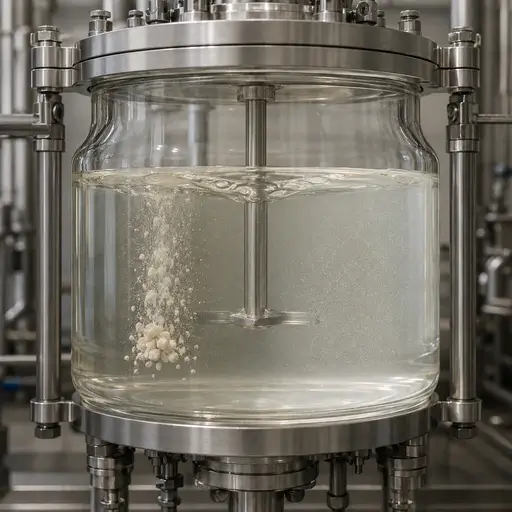
Solubility is the equilibrium amount of a substance that can exist in solution under defined conditions. Dissolution is the time-dependent transfer of material from a solid into that solution. Solid form, particle size, accessible area, wetting, agitation, temperature, liquid chemistry, and mass-transfer conditions determine whether a powder reaches the required concentration quickly and completely.
Powder property
Solubility and dissolution
Equilibrium capacity and dissolution rate answer
different questions
Solubility is the equilibrium amount of a substance that can exist
in solution under defined conditions. Dissolution is the time-dependent
transfer of material from a solid into that solution. Solid form, particle size,
accessible area, wetting, agitation, temperature, liquid chemistry,
and mass-transfer conditions determine whether a powder reaches
the required concentration quickly and completely.




Core concept
High solubility does not guarantee fast dissolution
Solubility sets the equilibrium limit for a defined material, liquid, temperature, pressure, and chemical state. Dissolution rate describes how quickly material leaves the solid surface and is transported through the surrounding liquid. Conversely, metastable or amorphous material may dissolve rapidly and create supersaturation before crystallizing again. Measure concentration versus time, inspect remaining solids, and control the solid and liquid state throughout the test.
What controls it
Six groups of variables govern solubility and dissolution
Dissolution emerges from thermodynamic driving force, accessible solid-liquid interface, mass transfer, and any transformation occurring during the test.
States and interpretation
Different dissolution profiles can lead to the same final concentration
Use time-resolved concentration and solid-residue analysis to distinguish the controlling mechanism.
| Observed profile | Possible cause | What to verify | Decision value |
|---|---|---|---|
| Long induction then rapid rise | Poor wetting, trapped air, coating rupture, or delayed transformation | Wetting behavior and early solid state | Separate contact delay from intrinsic kinetics |
| Fast start then plateau | Local saturation, depletion, passivation, or insufficient solvent capacity | Concentration, pH, residue, and liquid volume | Identify equilibrium or transport limitation |
| Overshoot then decline | Supersaturation followed by precipitation or phase conversion | Solid form and concentration versus time | Assess metastable performance |
| Persistent residue | Insoluble phase, agglomerate core, contamination, or incomplete conversion | Residue composition and morphology | Distinguish low solubility from foreign solids |
How to measure it
Choose a dissolution method by the decision
Match the fluid, hydrodynamics, sink condition, timescale, and analytical endpoint to the intended use.
Where it matters
Solubility and dissolution become rate and completeness constraints
The relevant endpoint may be final concentration, time to availability, conversion, cleanliness, or absence of residual solids.
Go deeper
Three practical routes into dissolution performance
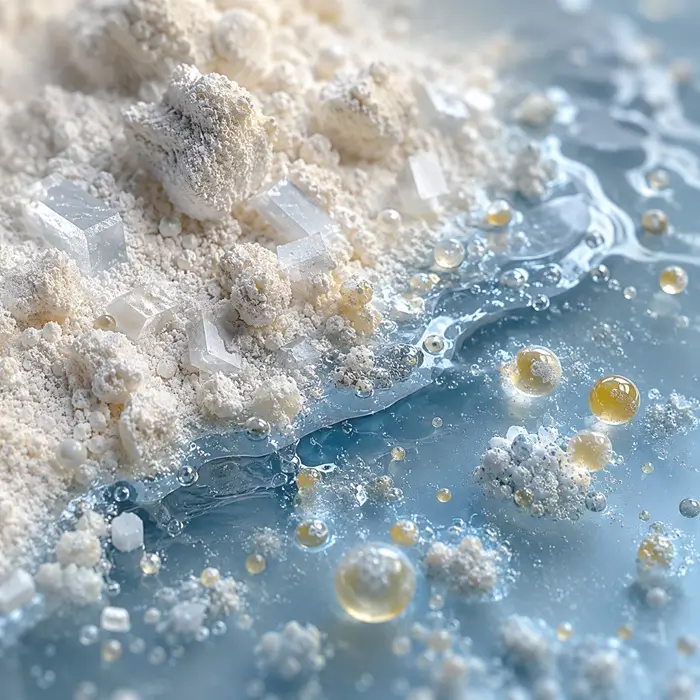
Explore surface-controlled API dissolution, powder wetting as the necessary first event, and the role of dispersion and chemistry during liquid processing.

Need the measurement, not just the guidance?
If the remaining uncertainty concerns equilibrium solubility, dissolution rate, solid-form transformation, supersaturation, residue identification, or process-matched liquid testing, select the measurement around the material state and process decision. PowderTechnology.info can help define the test sequence, sample conditions, and interpretation route. For laboratory support, explore our Delft Solids Solutions partner page or visit Delft Solids Solutions directly.