
Table of contents
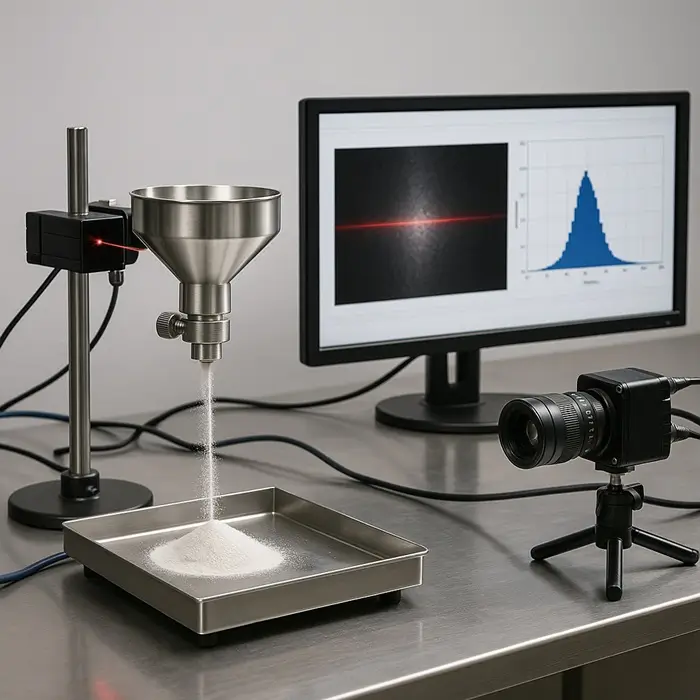
AI now runs beside the test bench. Imaging, spectroscopy, and machine learning work together. Engineers see structure, dynamics, and contamination with more certainty. As a result, teams reduce trial loops and improve release decisions across regulated sectors.
Core Properties, New Limits, and What AI Adds
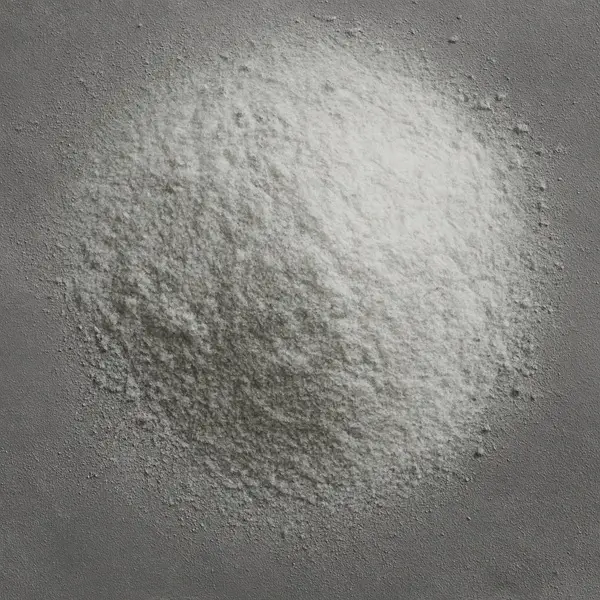
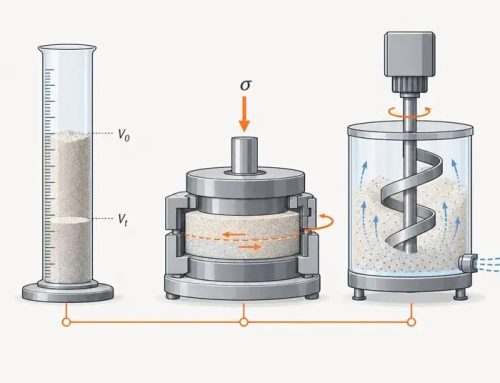
Powder behavior depends on size, shape, area, porosity, density, and moisture. Classic tools set the baseline. However, static tests miss humidity-driven agglomeration and handling effects. AI-assisted material characterization closes that gap. It fuses fast imaging with trained models. It flags early clustering and flow risks before batches move.
Fast PSD from Speckle Imaging
Single-snapshot speckle imaging estimates PSD in milliseconds after training. Recent work cut reconstruction from ~15 seconds to ~0.25 seconds per frame. Lines now screen granulation and drying in near real time, with accuracy tied to sound calibration sets.
DEM with Machine-Learned Parameters
Machine learning speeds DEM calibration. It infers friction, cohesion, and restitution from focused tests. Calibrated models then predict flow and segregation under shear and humidity. Engineers refine blender designs virtually before trials begin.
Digital Twins for Powders and Equipment
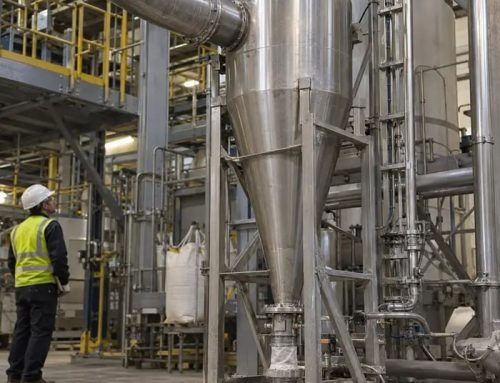
Digital twins combine validated flow data with live sensors. They track drift and forecast faults. Aviation shows the model. Rolls-Royce uses engine twins for condition monitoring and maintenance planning. Process plants can mirror this approach for mills, dryers, and feeders.
Inline QC: Vision, Spectroscopy, and Fewer Deviations
High-speed vision with CNNs inspects at more than 1,000 fps. Systems flag agglomerates and foreign matter in streams. A tray-inspection example at Eli Lilly shows the impact. Vision cut count-related deviations and rework during vial handling. Similar methods now monitor powders and intermediates on the line.
In pharma, hyperspectral and NIR support PAT and real-time release testing. Teams verify API distribution without destroying tablets. They link spectra to reference methods and hold models under change control.
Multimodal Data Fusion for Batteries and AM
Fusion matters when mechanisms cross scales. Battery groups link SEM, XRD, and rheology to track degradation. Models map phase change and crack growth to performance loss. Coating teams then adjust solids loading and shear to keep films uniform. Hyperspectral tools also detect trace sulfur in graphite. Trained classifiers sort clean and contaminated lots with high accuracy. Results outpace manual checks when data are well curated.
Sustainability: Dryer Energy Down, Claims Balanced
Heat-pump retrofits and model-predictive control cut dryer energy use. GEA case work reports large CO₂ savings after audits on dairy spray lines. Exact values vary by plant and scope. Quote site-specific numbers in project reports.
Yet AI itself draws energy. Recent reviews place digital tech near 2.5–3.7% of global emissions. New analysis shows AI growth raising data-center loads further. Treat the balance transparently in sustainability plans.
Implementation Playbook
-
Start with a data plan. Define owners, schemas, and retention.
-
Build robust references. Link spectra and images to lab truth.
-
Validate models under expected drift. Track domain shift and sensor aging.
-
Version all models. Use change control before release.
-
Train people. Blend materials science, statistics, and MLOps.
-
Close the loop. Tie predictions to actions at the mill, dryer, or feeder.
Limits and Good Practice
Models fail when data drift goes unseen. Sensors foul and lose calibration. Label noise can sink accuracy. Therefore, audit inputs often. Use uncertainty checks. Keep a safe fallback when confidence drops.
Realistic Future Outlook
Quantum methods may speed micro-scale sintering models. However, timelines remain uncertain. Blockchain can help trace records. Treat it as tamper-evident, not absolute. Self-healing control loops already adjust for humidity swings. Plants hold pressing density within tight limits without manual tweaks. Pilot carefully, then scale.