
In September 2026, Foods Alive recalled organic moringa leaf powder after a supplier reported finding Salmonella in a retail sample of its super green powder mix. By then, the affected moringa had already been distributed across the United States [1].
The positive result came from a downstream product, not from the original ingredient as it entered the supply chain. The FDA notice does not say whether earlier tests on the moringa were negative, nor does it identify where the contamination originated.
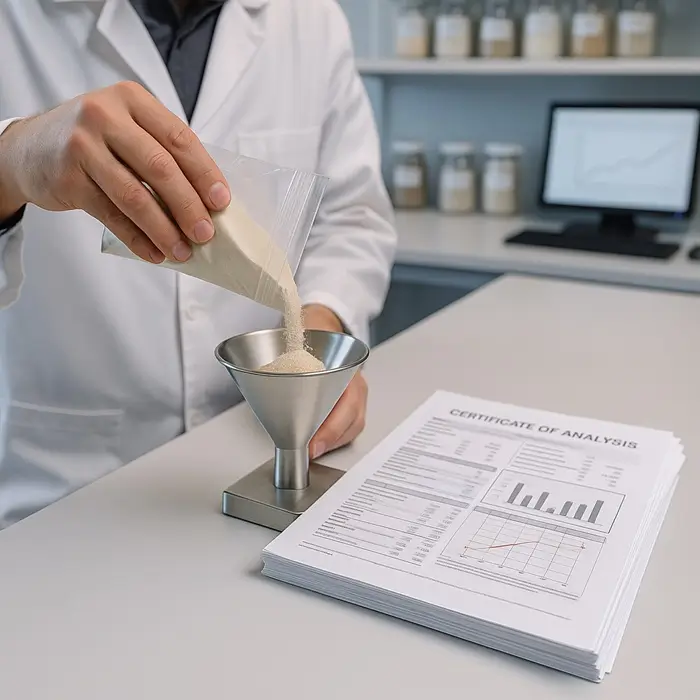
Still, the case highlights a problem familiar to anyone handling bulk powders. Testing a small amount of material is straightforward. Establishing what that result says about several tons of powder is considerably harder.
A Powder Lot Is Not Necessarily Uniform
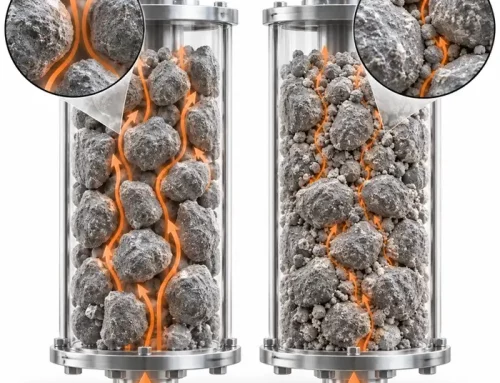
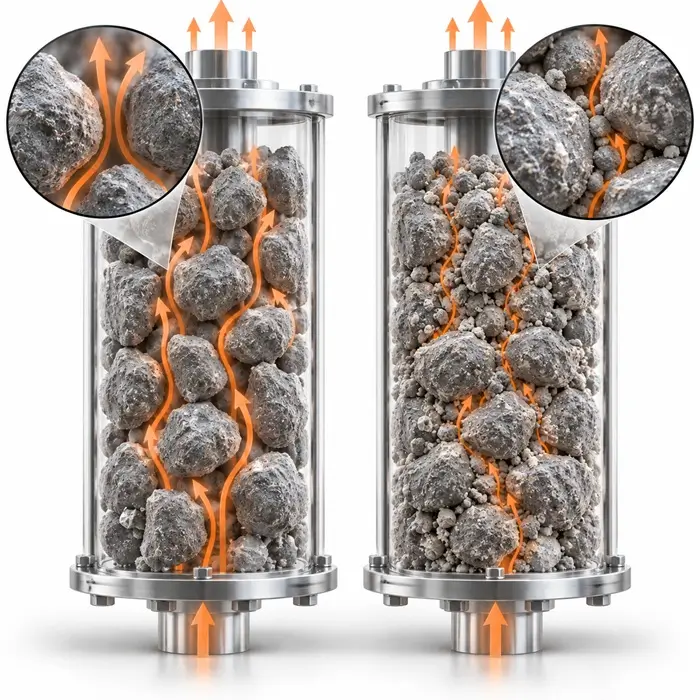
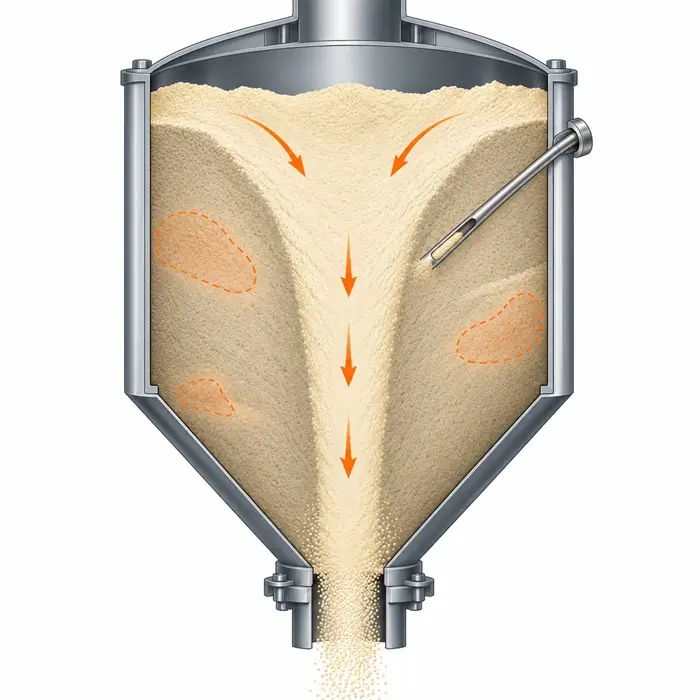
A powder may look perfectly consistent while its microbial contamination is anything but evenly distributed. Consider a silo operating in funnel flow. Powder moves down through a central channel while material beside the walls remains stationary. If contaminated material enters one of those stagnant regions, it can remain there while the rest of the contents discharge. It may only reappear when the silo is nearly empty, a rathole collapses, or the equipment is disturbed during changeover. In some circumstances, retained material can even carry into the next production lot.
Segregation complicates matters further. Fine particles, coarse particles, and agglomerates do not always follow the same path through filling, conveying, and discharge. If contamination is associated with a particular fraction, that fraction may accumulate in places that routine sampling misses.
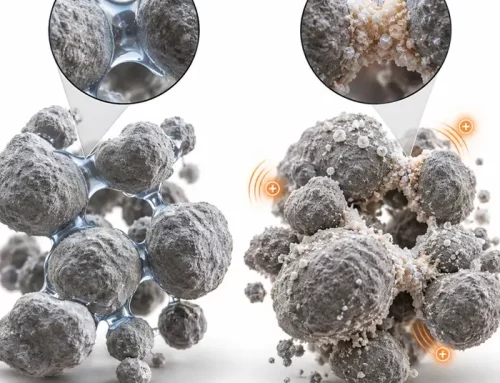
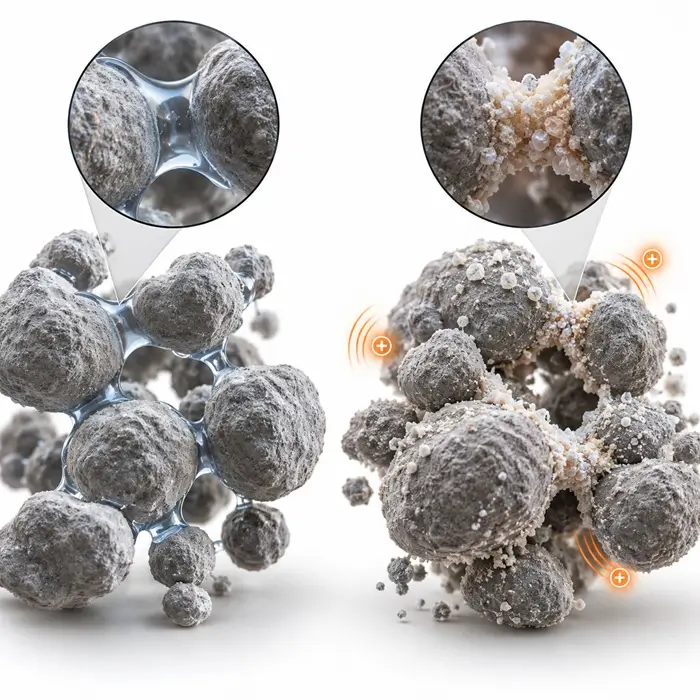
Then there are the surfaces inside the equipment. Powder deposits in a dryer, residues left after wet cleaning, or condensation in a poorly controlled section of a line can provide places for microorganisms to persist. Salmonella cannot multiply in sufficiently dry material, but it can survive for extended periods.
None of these mechanisms has been established as the cause of the Foods Alive recall. They do, however, explain why the physical history of a powder matters when deciding where to look for contamination.
Blending Changes the Odds of Detection
Imagine a contaminated ingredient entering a mixer with several other powders. Mixing does not destroy the microorganisms. It moves them around. Depending on how thoroughly the materials blend, contamination that was initially concentrated in one region may become distributed through a much larger batch. That increases the amount of powder potentially affected, sometimes across several finished products.
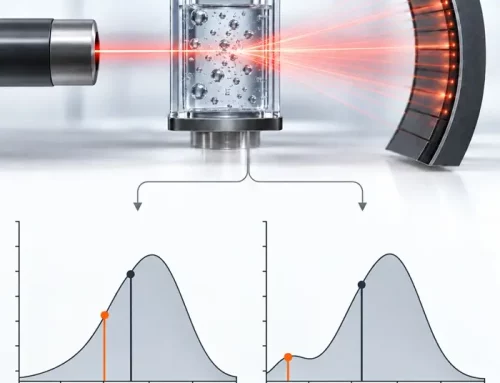
It can also change the chances of detecting the contamination. A sample taken after mixing may be more likely to include some affected material, but the organisms may now be present at a lower concentration. If none reaches the portion actually analyzed, even a sensitive enrichment method has nothing to detect.
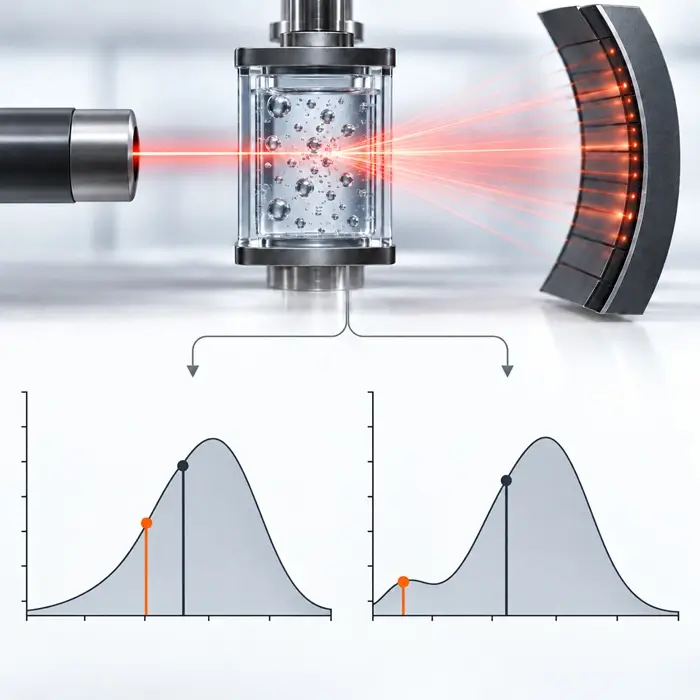
Valero and colleagues modeled how sample size affects detection in heterogeneously contaminated powdered foods. Under the conditions they studied, using 100 g samples reduced the number of tests needed compared with using 1 or 10 g samples [2].
It would be tempting to conclude that larger samples are always the answer. They are not. A larger sample drawn from the wrong part of a lot can still miss a localized pocket of contamination. That is where the number and location of sampling increments become important.
What 2,290 Samples Revealed
Jongenburger and colleagues investigated a recalled batch of powdered infant formula containing Cronobacter. The results show how misleading a small collection of negative samples can be [3]. Of 415 samples tested using the most probable number (MPN) method, 58% contained no Cronobacter above the detection limit. The remaining samples ranged from −2.52 to 2.75 log CFU/g. The researchers also examined 2,290 one-gram samples. Dense clusters of cells appeared in just eight of them, with the two largest clusters containing 123 and 560 cells. In other words, contamination was present at low levels across parts of the batch, punctuated by occasional pockets containing far more organisms. Whether a sample detected anything depended heavily on which part of the powder it happened to contain.
The researchers found that taking more, smaller samples could improve detection even when the total amount of powder collected remained unchanged. A separate study by Jongenburger and colleagues compared random and systematic sampling. Systematic sampling improved detection probability by as much as 0.37 in their model, with the greatest improvement occurring when the sampling interval matched the size of the contaminated fraction [4].
Kim and colleagues reported a similar finding in 2023. Their simulations showed that systematic or stratified sampling performed at least as well as random sampling under the conditions examined, and that covering more sampling locations could improve detection even when individual increments were smaller [5].
There is no contradiction between those findings and Valero’s results. Larger analytical portions improve the chance of capturing rare organisms within material already collected. Taking more increments from different locations improves the chance of reaching contaminated material in the first place.
Both problems need attention.
How Much Sampling Is Enough?
<p>The US requirements for powdered infant formula provide a useful example of how seriously microbial sampling is treated in a high-risk product category.</p>
<p>Under <a href=”https://www.ecfr.gov/current/title-21/section-106.55″ target=”_blank” rel=”noopener noreferrer”>21 CFR § 106.55</a>, manufacturers must test representative samples from each production aggregate before distribution. The regulation specifies 60 analytical units of 25 g for <em>Salmonella</em> and 30 units of 10 g for <em>Cronobacter</em>, with none detected <a href=”#ref-6″>[6]</a>.</p>
<p>Those requirements are specific to powdered infant formula. They are not a general sampling plan for moringa, seasonings, or other powdered ingredients.</p>
<p>To understand the statistical problem, consider a simplified example. Suppose just 1% of potential sampling locations contain detectable contamination. Each sample is drawn independently from a random location, and the test detects the organism whenever it is present.</p>
299 independent samples: at least 95% probability of detection.
That is not an assessment of the infant-formula regulation or a recommended microbiological sampling plan. Real detection probabilities depend on how contamination is clustered, how much material is collected, the concentration of organisms, and what happens during sample preparation and analysis.
The calculation simply illustrates how difficult it becomes to find something that occurs infrequently and unevenly.
Follow the Powder Before Choosing the Sampling Point
For a powder processor, the first question should not be how many additional samples to take. It should be where contaminated material could collect and when that material might appear in the product stream.
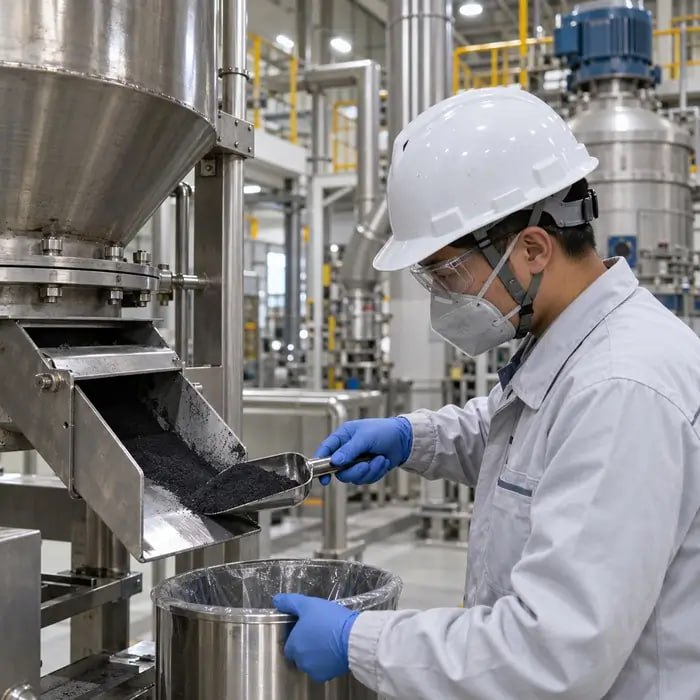
In a silo, that means understanding the discharge pattern and identifying stagnant regions. On a filling line, it means looking at the sequence in which material leaves the equipment. For a blending operation, it means considering ingredient addition, mixing, segregation, and what remains in the system between batches. Sampling at several defined points during discharge may reveal changes that repeated grab samples from one convenient opening would miss. Where increments are combined, the compositing procedure and analytical portions must follow the applicable validated method.
None of this removes the need for microbiological testing. It puts the results in context. Supplier controls, hygienic equipment design, validated preventive processes, environmental monitoring, and traceability remain essential because no practical sampling plan can guarantee that every contaminated region has been found. If a powder lot contains isolated pockets of contamination, the laboratory cannot detect material that never reaches its test portion. Understanding how the powder moves is therefore part of understanding what a negative result is worth.