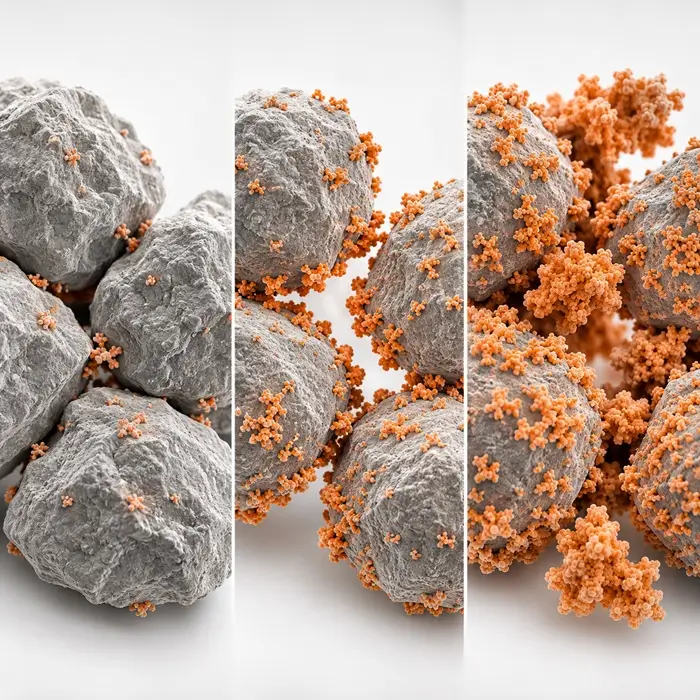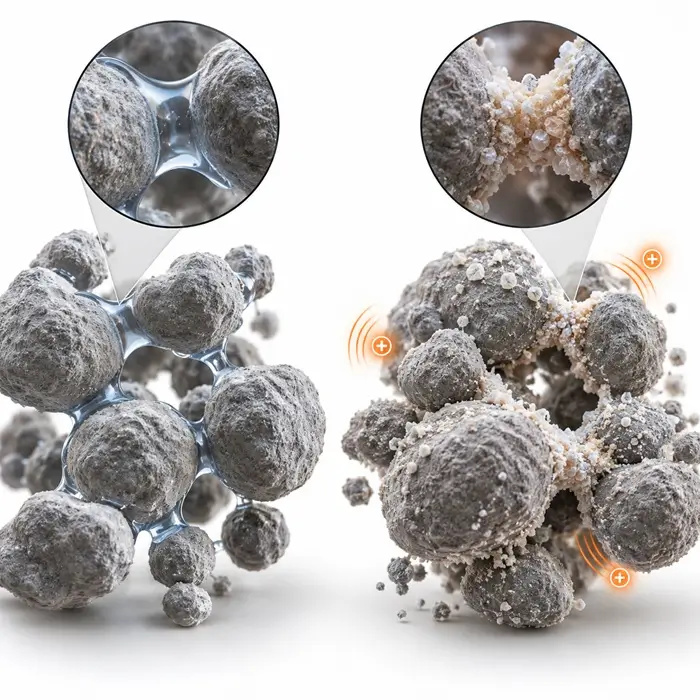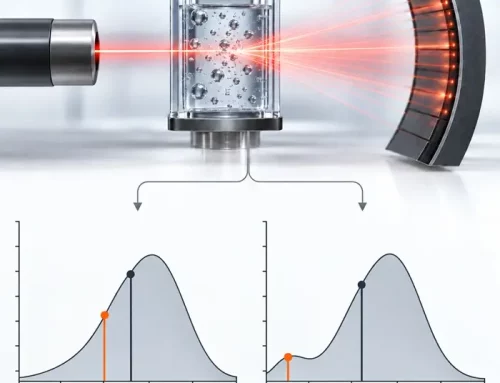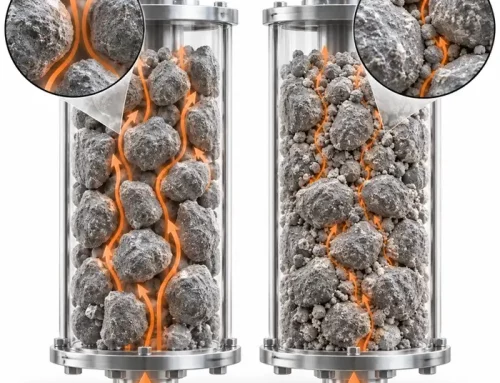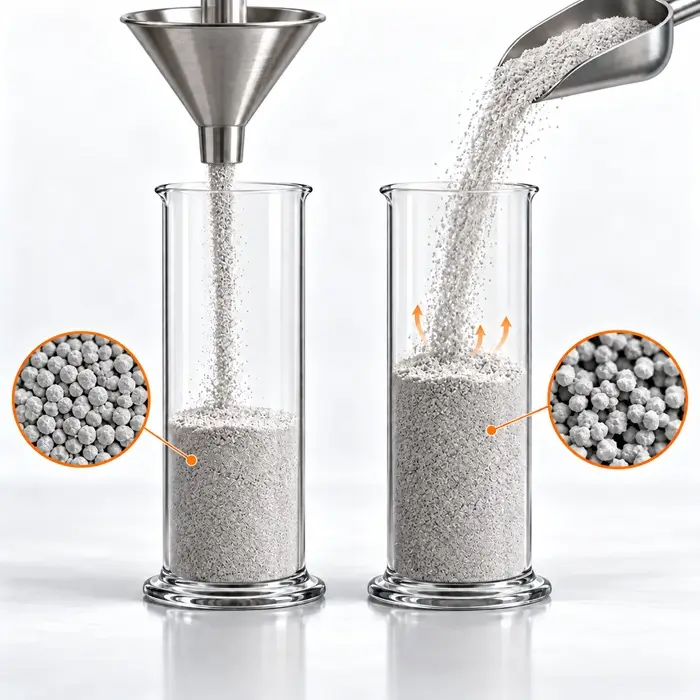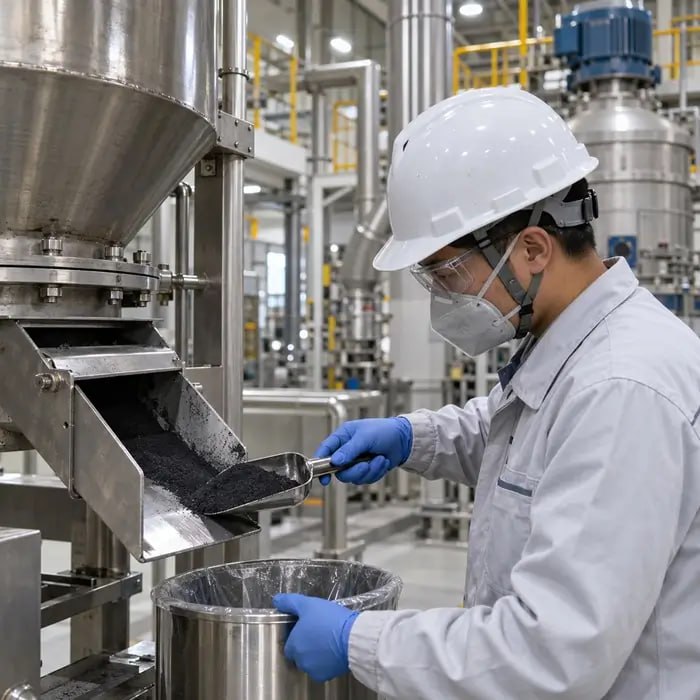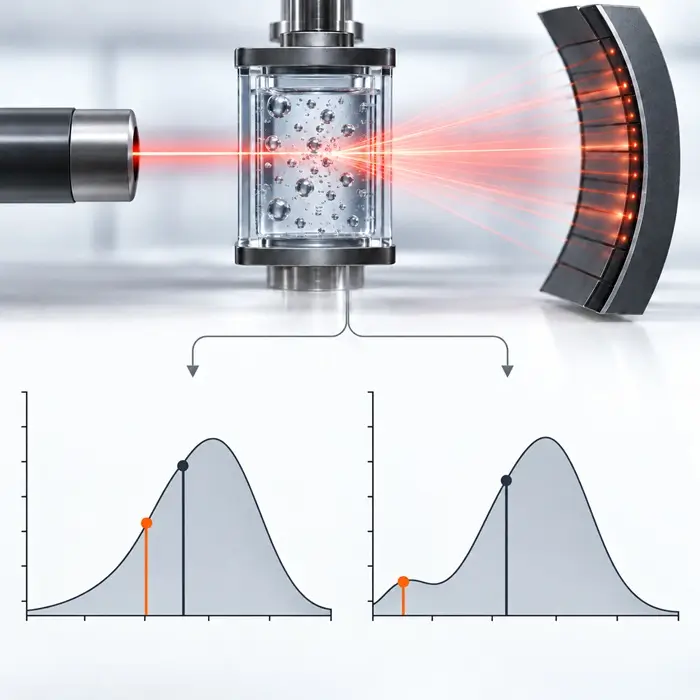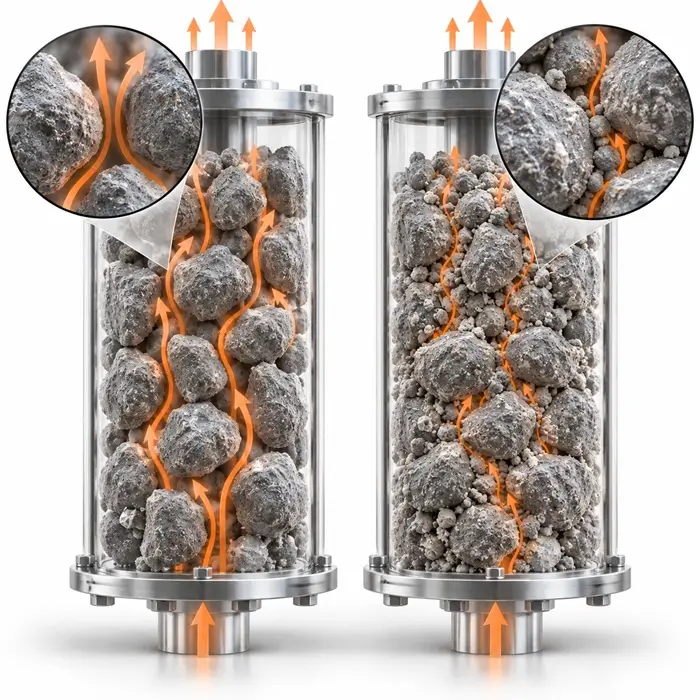

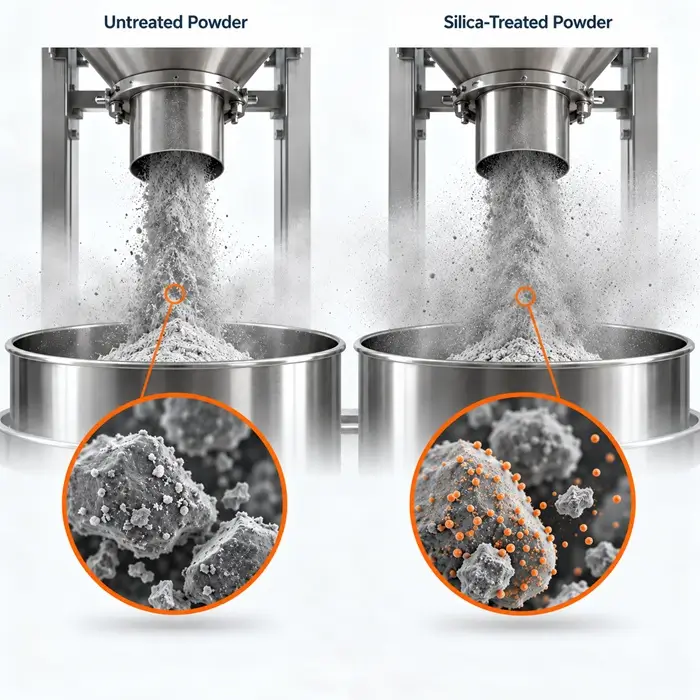
Schematic image placeholder: show silica attached to larger host particles before handling and a fraction of the additive detaching into the airborne dust during transfer. The illustration should not be presented as a TEM image from the study.
How Can Reduced Adhesion Increase Dust Release?
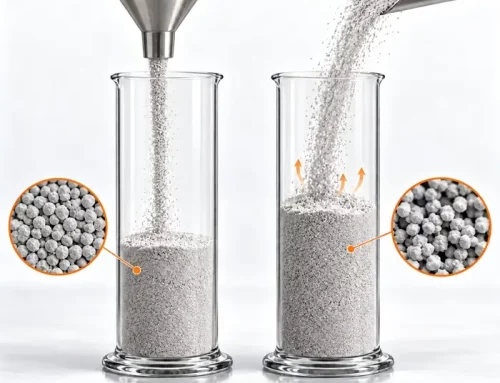
Anti-caking agents and flow promoters can modify particle surfaces and act as spacers, reducing the contacts that help particles form stable agglomerates. This can improve powder discharge and reduce caking during storage. Those same changes may make fine material easier to dislodge when powder falls, collides, or passes through equipment. Some released dust may come from the host powder; some may come from the additive. Whether this happens depends partly on how firmly the additive stays attached, which the study below addresses directly.
What Did the Silica Study Show?
Jiménez Garavito and colleagues investigated SIPERNAT® D 10 (SD10), a hydrophobic precipitated silica used as a flow promoter and anti-caking agent, in four industrial powders: Avicel PH102 (microcrystalline cellulose), wheat flour, joint filler, and glass beads. They tested untreated powders and SD10-treated mixtures with a rotating drum (EN 15051-2) and vortex shaker (EN 17199-5), using the standard editions available in 2023. The treated mixtures were statistically dustier than the untreated powders. Dustiness increased across the inhalable, thoracic, and respirable fractions, and some mixtures approached the dustiness of SD10 alone. TEM analysis of airborne particles collected during vortex-shaker testing showed SD10 detaching from host-particle surfaces and generating nanometric dust. The emitted material was therefore not simply more of the original powder: it also included nanoscale additive particles, potentially changing the exposure profile. Using inverse gas chromatography (IGC) to analyze surface energy, the researchers found that stronger powder-to-SD10 interactions were associated with lower dust emissions. This identifies additive attachment as a useful formulation consideration, although the findings cannot be generalized to every anti-caking agent.
Which Dustiness Test Should You Use?
Compare treated and untreated samples under controlled moisture and humidity conditions, documenting additive dosage and mixing procedures. Select the dustiness method according to the handling operation and the particle fractions of interest. – EN 15051-3:2025, continuous drop: Simulates conveying, discharging, and filling, measuring inhalable and respirable fractions, but not thoracic under the standard procedure. – EN 15051-2:2025, rotating drum: Repeatedly drops the same material and measures inhalable, thoracic, and respirable dustiness fractions. – EN 17199-5:2025, vortex shaker: Characterizes respirable releases, including nanoscale particles. It has no established dustiness classification scheme. Vortex-shaker results should not be assigned EN 15051 dustiness categories or compared directly with drum and drop results as though the methods were equivalent. The standard notes that the shaker aerosolizes more energetically than the drum and drop methods. Whether that represents a realistic or worst-case scenario for a given process should be checked against the actual operation. If an additive may detach, analyze collected airborne particles by microscopy or compositional methods to identify their source. Laboratory dustiness is not workplace exposure: containment, ventilation, and operating conditions also matter. The practical aim is to choose an additive grade and dosage that improve storage or discharge without creating an unacceptable dust-release trade-off.
Technical Basis / Sources
– Jiménez Garavito, M. C., Cares Pacheco, M. G., Witschger, O., Bau, S., Gerardin, F., and Falk, V. (2023). The effect of silica nanoparticles on the dustiness of industrial powders. Advanced Powder Technology, 34(9), 104105. – EN 15051-2:2025. Workplace exposure: Measurement of the dustiness of bulk materials, rotating drum method. – EN 15051-3:2025. Workplace exposure: Measurement of the dustiness of bulk materials, continuous drop method. – EN 17199-5:2025. Workplace exposure: Vortex shaker method.